filter-listOverview of Carbon Classes

Learn how the Klima Protocol organises individual carbon credits into structured “carbon classes.”

circle-exclamation

What Is a Carbon Class?

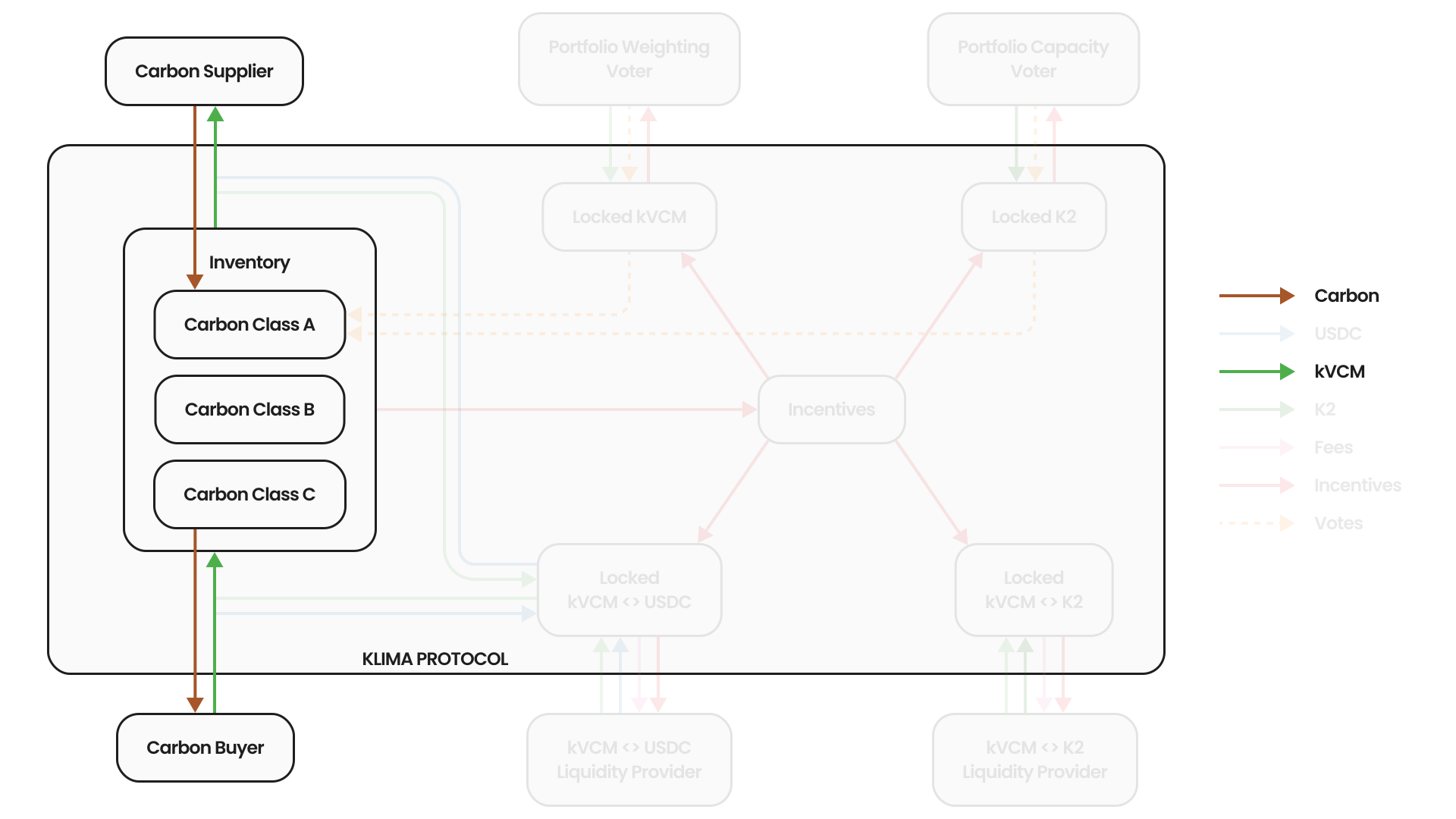
A carbon class groups carbon credits with sufficiently similar characteristics to enable structured intake and retirement under shared execution terms.

Credits within a class must share relevant attributes, such as:

  • Methodology

  • Technology type

  • Certification standard

  • Geography

  • Vintage

  • Registry

Classes allow comparability across credits while preserving project-level specificity.

Suppliers and buyers interact with the protocol through these classes:

  • Suppliers: Provide eligible tokenised credits into a class at the prevailing execution rate.

  • Buyers: Access credits from a class for irreversible retirement at the prevailing execution rate, either directly or via third-party interfaces.

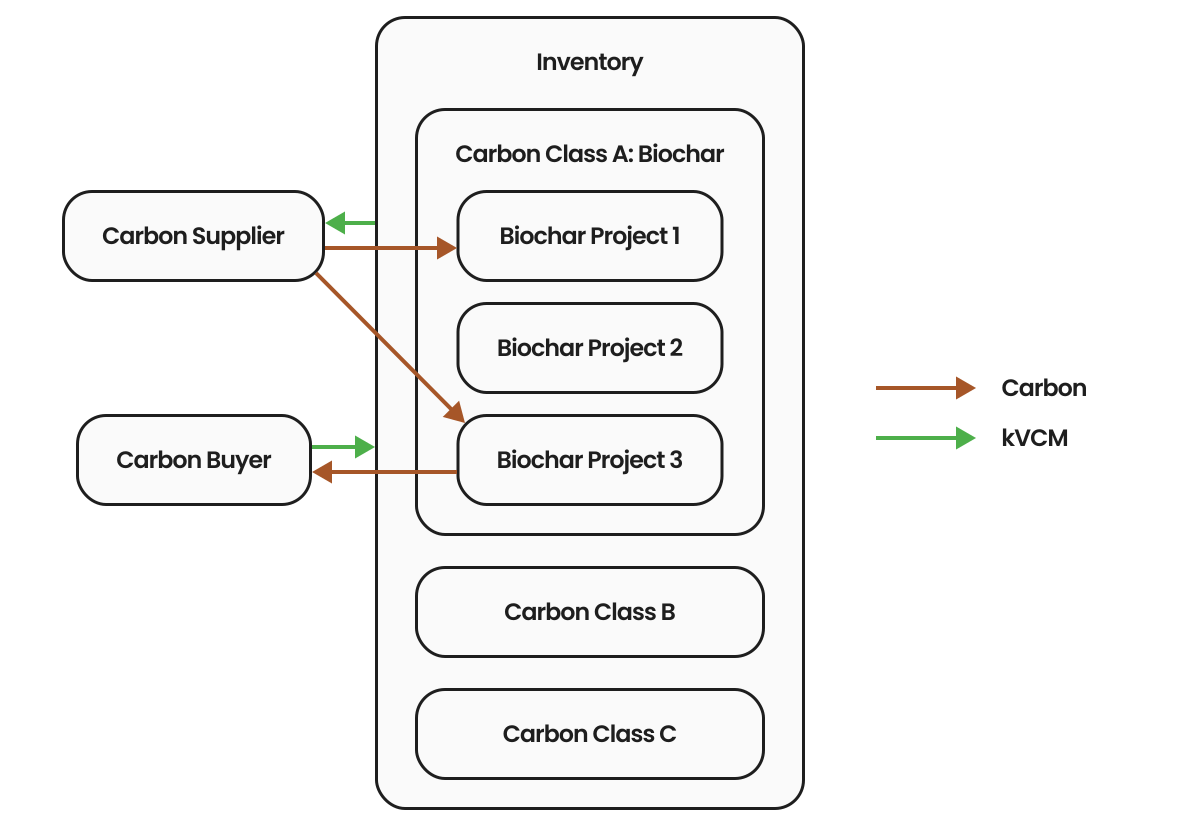
Although classes standardise execution terms, users may select specific underlying credits within the class when supplying or retiring.

For example, a carbon supplier holding Biochar Project 1, could supply that credit to the Biochar carbon class if they are happy with the current execution terms, without needing to hold Biochar Project 2 or 3. Similarly, a user looking to retire carbon credits could choose to retire Biochar Project 3 only (i.e. they would not to receive a randomised unit from within the class).

Dynamic Structure

Carbon classes are not static. They may evolve to reflect changes in methodologies, registries, or market conditions.

For example:

  • A new methodology may be added to an existing class.

  • A methodology may be deprecated for future intake while existing inventory remains eligible for retirement.

  • A new class may be created to separate credits previously grouped together.

Changes affect eligibility for future intake. Credits already held by the protocol remain available only for retirement.


Whitelisting Framework

Whitelisting determines which credits are eligible for protocol intake under a given carbon class.

Whitelisting may involve:

  • Creating a new carbon class

  • Adding credits to an existing class

  • Restricting new intake for specific credits

Eligibility criteria may include:

  • Certification standards

  • Methodology relevance

  • Vintage parameters

  • Geography

  • Public issuance and retirement data

  • Registry approval for blockchain integration

Note: All integrated credits require explicit permission from the originating registry to mitigate double-counting risk and ensure compliance with registry terms.


Governance & Process

The initial whitelisting process will involve consultation with ecosystem partners. Proposals and feedback will be documented publicly.

Over time, governance mechanisms may incorporate structured token-based coordination.

All proposals, feedback, and decisions will be published prior to implementation to maintain transparency.


Current Carbon Classes

Carbon class
Whitelisted projects
Est. liquidity
Date added
Info. page

Ocean alkalinity enhancement

Limenet – CMARK02

14 tonnes

Live at launch

Coming soon

Biochar

TBD

100 tonnes

Live at launch

Coming soon

Avoided deforestation

ECO-22; ECO-114

30,000 tonnes

Live at launch

Coming soon

Regen – City Forest Credits

TBD

TBD

TBD

Coming soon

Last updated